
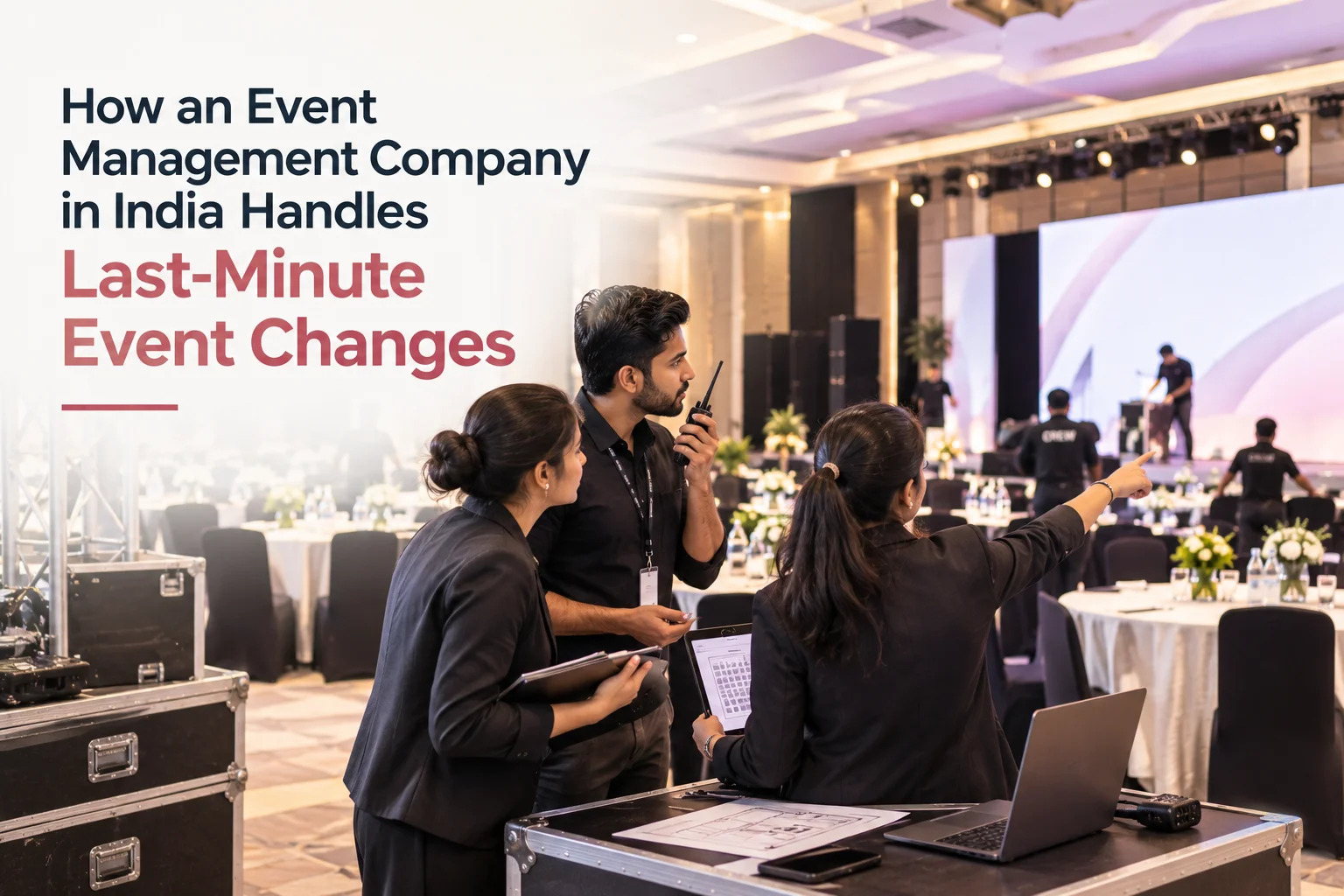
How an Event Management Company in India Handles Last-Minute Event Changes
Planning an event involves many moving parts. Venues, vendors, guests, technology, schedules, and entertainment must all work together. However, even a detailed plan can face unexpected changes. A speaker may cancel hours before the event. A supplier may arrive late. Weather can affect an outdoor programme. Technical equipment may also fail at an important moment. These situations can put pressure on organisers and affect the guest experience. This is where an event management company in India can make a difference.
Professional event teams know how to respond quickly while keeping the main event on track. They use contingency plans, clear communication, vendor coordination, and flexible schedules to manage unexpected situations. The aim is not simply to fix problems. It is to solve them without creating unnecessary confusion for guests, clients, or other event partners.
In this blog, we will explore how an event management company handles unexpected changes, manages vendors, protects the guest experience, and keeps events running smoothly.
The Role of Professional Planning in Smooth Event Execution
Unexpected changes can happen during almost any event. However, professional planning can help reduce their effect on guests and organisers. An experienced event management company in India understands that every event has different requirements. From guest movement and venue coordination to technical support and vendor communication, each detail needs careful attention.
Professional planners work behind the scenes to keep the event organised when plans change. They also make quick adjustments while keeping the guest experience in focus. This allows businesses to handle unexpected situations without creating unnecessary confusion or delays.

Start With a Quick Assessment
When a last-minute change happens, the first step is to understand its impact. An experienced event team does not immediately change the entire programme.
Instead, planners involved with an event management company assess what has happened and determine which areas could be affected. For example, a delayed speaker may only require a change in the session order. However, a venue issue could affect catering, seating, production, and guest movement.
The team therefore identifies the priority before taking action. This helps prevent small issues from becoming larger disruptions.
Use Backup Plans Before Problems Grow
Good event planning involves preparing for situations that may not happen. Professional planners create alternative solutions for important parts of an event. These plans give the team options when the original arrangement becomes difficult. Common backup arrangements include:
- Alternative suppliers for important services
- Spare audiovisual and technical equipment
- Backup speakers or programme activities
- Alternative indoor spaces for outdoor events
- Additional transport options
- Flexible seating arrangements
- Extra event staff for urgent situations
- Updated emergency contact lists
These arrangements can save valuable time when something unexpected happens. Furthermore, having a backup plan helps the event team make decisions with greater clarity instead of reacting without direction.

Keep Communication Simple and Fast
Communication becomes especially important during a last-minute change. An event may involve clients, venue managers, production teams, caterers, decorators, security staff, entertainers, and other suppliers. Everyone needs to understand what has changed and what they need to do next.
For example, if a session moves to another room, the event team involved with the hired corporate event management company can immediately notify venue staff, production teams, registration staff, and guests. Clear instructions also prevent different teams from following different versions of the plan.
Coordinate Every Vendor
Large events rarely depend on one supplier. They usually involve several teams working together. These can include:
- Caterers
- Decorators
- Audiovisual teams
- Photographers
- Entertainment providers
- Transport companies
- Security teams
- Venue staff
- Production crews
A change affecting one vendor can quickly affect another. For example, if stage installation is delayed, lighting, sound checks, rehearsals, photography, and the event schedule may also be affected.
An event management company in India can coordinate these teams from one central point. This makes it easier to communicate changes and assign responsibilities. Strong vendor relationships can also help event planners find solutions quickly when circumstances change.
Manage Sudden Guest-Count Changes
Guest numbers are not always predictable. A corporate event may receive additional registrations close to the event date, while a VIP may confirm attendance at short notice. Some guests may also cancel unexpectedly.
These changes can affect seating, food and beverages, registration, transport, security, guest hospitality and event materials. Professional planners usually prepare for reasonable changes instead of relying only on the original guest count. Flexible seating and catering arrangements can make these adjustments easier while helping the event run smoothly.

Use Technology for Faster Updates
Technology has become an important part of modern event planning. Digital registration systems can help teams manage attendee information, while online documents allow authorised staff to access updated schedules quickly. Event communication tools can also help teams share important changes with staff, vendors and other stakeholders.
Technology can support guest registration, schedule management, attendee communication, digital invitations, presentation management, vendor coordination, event data and on-site updates. However, technology should not become the only solution.
Important information should have suitable backups to ensure the team can continue working if a platform, internet connection, or device stops working. When used correctly, these tools can make last-minute adjustments faster, clearer and more organised.
Build Flexibility Into the Schedule
A tightly packed schedule can make unexpected delays difficult to manage. Experienced planners involved with an event management company understand the value of leaving reasonable gaps between important activities. These time buffers can help when:
- A speaker arrives late
- A presentation takes longer
- Technical equipment needs adjustment
- Guests take longer to enter a venue
- A production setup is delayed
- A session runs beyond its planned duration
A small amount of flexibility can prevent one delay from affecting the entire programme. However, buffers should be planned carefully. Too much unused time can affect the energy and flow of an event.
Give Team Members Clear Responsibilities
Last-minute situations require quick decisions. If everyone tries to make the same decision, valuable time can be lost. Therefore, professional event teams establish responsibilities before the event begins.
Responsibilities may include:
- Event manager: Oversees the overall response and communicates with the client.
- Production team: Handles staging, lighting, sound, screens, and technical requirements.
- Guest team: Manages registration, hospitality, directions, and attendee concerns.
- Vendor coordinator: Communicates with suppliers and manages changes.
- Venue coordinator: Works with venue staff on rooms, facilities, and logistics.
This clear division of responsibility allows the team to respond without unnecessary delays.
Conclusion
Last-minute changes are a normal part of event planning. What matters is how the team responds to them. A professional event management company in India uses contingency planning, clear communication, reliable vendors, flexible schedules, technology, and defined responsibilities to keep events moving.
The right preparation can protect the guest experience while helping organisers stay focused on their main objectives. If you are planning a corporate event, brand activation, exhibition, conference, or other large-scale experience, then you can trust us at Benchmark Marcom. We can help you to manage the entire event planning and execution process to gain better results. To explore more about our event management solutions, visit our website now.
FAQs
-
What are common last-minute changes at an event?
Common changes include speaker cancellations, weather problems, technical failures, vendor delays, guest-count changes, and schedule adjustments.
-
How does an event management company prepare for unexpected problems?
It can prepare through contingency plans, backup suppliers, alternative venues or activities, emergency contacts, spare equipment, and flexible schedules.
-
How can event planners manage a sudden increase in guests?
Planners can use flexible seating, additional catering arrangements, extra registration resources, and updated guest lists to manage sudden changes.
-
Why is communication important during an event emergency?
Clear communication ensures that clients, vendors, staff, and guests receive accurate information. It also prevents different teams from taking conflicting actions.
-
Can last-minute event changes increase costs?
Yes. Unexpected changes may require additional equipment, staff, transport, catering, or venue arrangements. A contingency budget can help manage these expenses.